Custom sites, without the custom timeline
A designer makes every call for your brand and AI does the production underneath. New sites go on Astro, so they're fast and yours to keep, and the whole build barely touches your calendar.
We build for multi-location healthcare groups, from one flagship practice to portfolios of dozens.
We build at any scale
Start wherever your portfolio is.
One standout practice
A flagship or specialty that has to break the mold and look like nobody else. A full custom build.
Your whole portfolio
Dozens of inherited sites made consistent and manageable, each one still its own.
One consolidated brand
Every location under a single large site, run as one property.
Custom used to mean months. Ours doesn't.
A custom site used to take months because people hand-built every page. That production work is also what pulled your team into round after round of review.
The same five steps, run two ways. The traditional way takes months end to end, with six rounds of review for your team. The way we build takes weeks end to end, with two rounds. The five steps are kickoff, custom design, copy and content, build and integrations, and staging and launch. What compresses is the copy and the hand-building, not the design.
The design decisions are identical. Nothing about how your site looks or works is decided by a machine. What changed is the slow part, the building itself, which now runs at a speed that wasn't possible a few years ago.
We build on Astro by default
Astro is the open-source framework under your site, the way WordPress is under most practice sites today. It's backed by Cloudflare, whose network serves about a fifth of all websites (W3Techs, 2025), and some of the largest sites on the web are built on it.
The page builder is built in. WordPress adds one on top, like Elementor. Astro's is part of your site's own code, so your team logs in and edits like any CMS, your group owns it, and it leaves with you.
A WordPress site is a theme and a stack of plugins, and every plugin is one more way in and one more thing to break. An Astro site has its own design, no plugins, and nothing to log in to on the public site.
Both make a fast, accessible practice site, and we build both well. Here's when we'd pick each.
Astro
What we'd recommend for a group with many sites.
Pick it if
- You run dozens of sites, or will.
- You want lower build and upkeep costs.
- Most changes come through support or AI.
WordPress
A worldwide community keeps its core current.
Pick it if
- Your IT requires it.
- Your team wants the editor it already knows.
What comes standard on every build
Every Astro build includes all of this. On a WordPress site we take over, the same work is scoped on its own.
Fast on a phone
Built phone first and tested in Lighthouse before launch, in clean, modern code that holds up against the attacks healthcare sites attract.
Usable by everyone
Keyboard navigable and WCAG Level A from day one, with 2.2 AA available as scoped work.
Private by design
PHI never touches the site. Forms hand patient details to HIPAA-safe systems, and every site launches with a consent banner and privacy and terms pages.
Readable by search and AI
Headings, metadata, schema, sitemap, canonicals and redirects, done properly, so search engines and AI assistants can read every page and cite it. Keyword strategy stays with your agency.
Built to book
Booking, calling and finding the nearest location are designed in from the first wireframe, and the tracking on each is confirmed firing before launch.
Yours to own
The code, content and domain are yours outright, with no license, no lock-in and training on the page builder. You could move to another vendor the day after launch and keep everything.
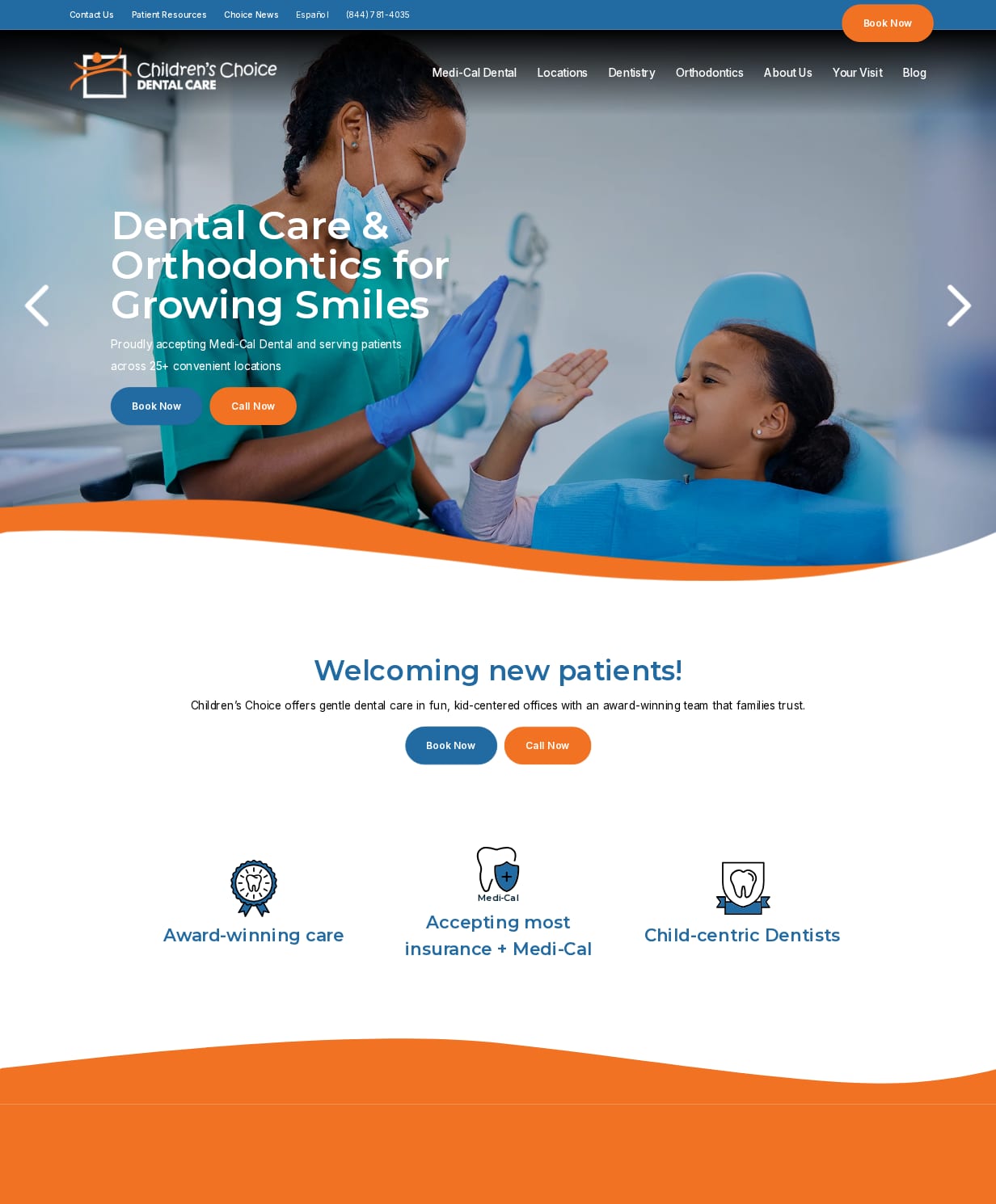
Choice Healthcare, onto one foundation
Choice Healthcare Services ran two dozen practice sites across different platforms and vendors, each with its own stack and its own analytics, and no way to compare one location to another.
We moved all of them onto a single shared foundation in under six months, kept each location's own brand intact, and put every site under one analytics view. For the first time they could see every location on the same terms.
Visit the Children's Choice website →

“Our previous marketing partner was charging thousands each month with little to show for it. Carenetic built two fully custom practice websites in just weeks and provides clear, consistent reporting every month. The difference has been night and day.”
Alyssa KeeferDirector of Marketing, Archway Dental Partners
How a new site comes together
Most of it happens without you in the room.
What it asks of you: a kickoff, two review rounds, and a launch sign-off. We do the rest.
For a whole group, we set the rules once and build on them
A group's build starts with onboarding, at a fixed price: everything your sites will share, settled before the first one is built. It's done once, so no site pays for it again.
- Who approves whatHow your group works, who signs off, and what each practice can change about its own site.
- A portfolio auditDomains, vendors, tracking and integrations across every site, and the problems that'll cost you now or later.
- One way to measureOne set of events for calls, forms and scheduling, documented once, so every site reports the same way.
- IntegrationsYour scheduling and form tools, set up once, so each site switches them on.
- Rankings that come alongRedirects, technical standards and schema, so every site keeps the search standing it has. Keyword strategy stays with your agency.
- Editing rulesWho on your team can change what, including any AI tools, decided once for every practice.
- A content briefWhat each kind of page has to say and how, so every site's copy is drafted against the same brief.
- The site foundationThe Astro page types every site is built on (providers, locations, services, posts), with cookie consent and accessibility built in.
Two kinds of practice site
Flagship
Built with the practice, the way we build a custom site: its own architecture, design and content, with someone at the practice who has a real say.
For: Your largest practices, and doctors with strong opinions.
Rollout
Built from a flagship's structure and design, with the practice's own brand and content. We arrive at one hour-long intake already prepared, and build the whole site.
For: Most practices.
Prove it on a few sites before the rest
Onboarding ends with your first sites live. Then we stop and look at them with you, because no rollout goes the way anyone pictured, and every site after should get the benefit.
-
1
Onboarding
- Many brands
- Governance and setup for the whole group: everything above, at a fixed price.
- One brand
- Architecture and strategy for one big site: how locations, providers and services are organized, the design system, and the CRM and scheduling it connects to.
-
2
The first sites
- Many brands
- One flagship, then two rollouts built from it, all live. One flagship at a time, so you can see how it's going before the rollouts start.
- One brand
- The core page designs and the first location pages, live, with your integrations wired in and checked.
-
3
Stop and reassess
We sit down with you, look at what worked and what didn't, and fix it before the rest. It's part of onboarding, so it always happens.
-
4
The rest, at the price you set
Tell us what each site after should cost and how much of the work your team wants to take on. We tell you what has to be true to land there, and the flagship sets roughly what the rollouts after it cost. Rollouts run two to four a week, side by side, and we reach out to each office for you.
Onboarding is priced up front, so the first step is predictable. Bill it to the parent company or split it across practices, whichever suits your accounting.
What better sites are worth to your group
The build is the easy part to price. The question that decides the rest is what better sites are worth across every location you run. Put in your location count. Everything else is our assumption, and you can change any of it.
When it's all one big site
Enterprise WordPress
One consolidated brand on a single large site is its own discipline. A new one goes on Astro now, and it does the job as well or better. If yours runs on WordPress, we take the property over, stabilize what's fragile, and improve it in phases, with no big-bang rebuild.
Stuck on a platform you hate
Getting you off a failing platform, or out from under an agency that went quiet, is part of what a build covers. Your content and your search rankings come with you. If a site isn't due for a rebuild yet, we take it over as it is, WordPress included, then patch and secure it.
After it ships
Most groups pair the build with our managed services, where an Astro site's speed, accessibility and technical SEO are checked on a schedule, and ongoing support and maintenance, where routine changes in the page builder are done in seconds, not days. None of that’s required, and the site is yours either way.
Common questions
How long does a new site take?
Who designs the site, a person or AI?
How is HIPAA handled?
What platform is it built on?
Can our marketing agency work with these sites?
What does it cost?
Let's talk about what you're building
Or see it before you talk to anyone. Send us a site that bothers you and we'll show you what its homepage could be, as a short video. No call required.